
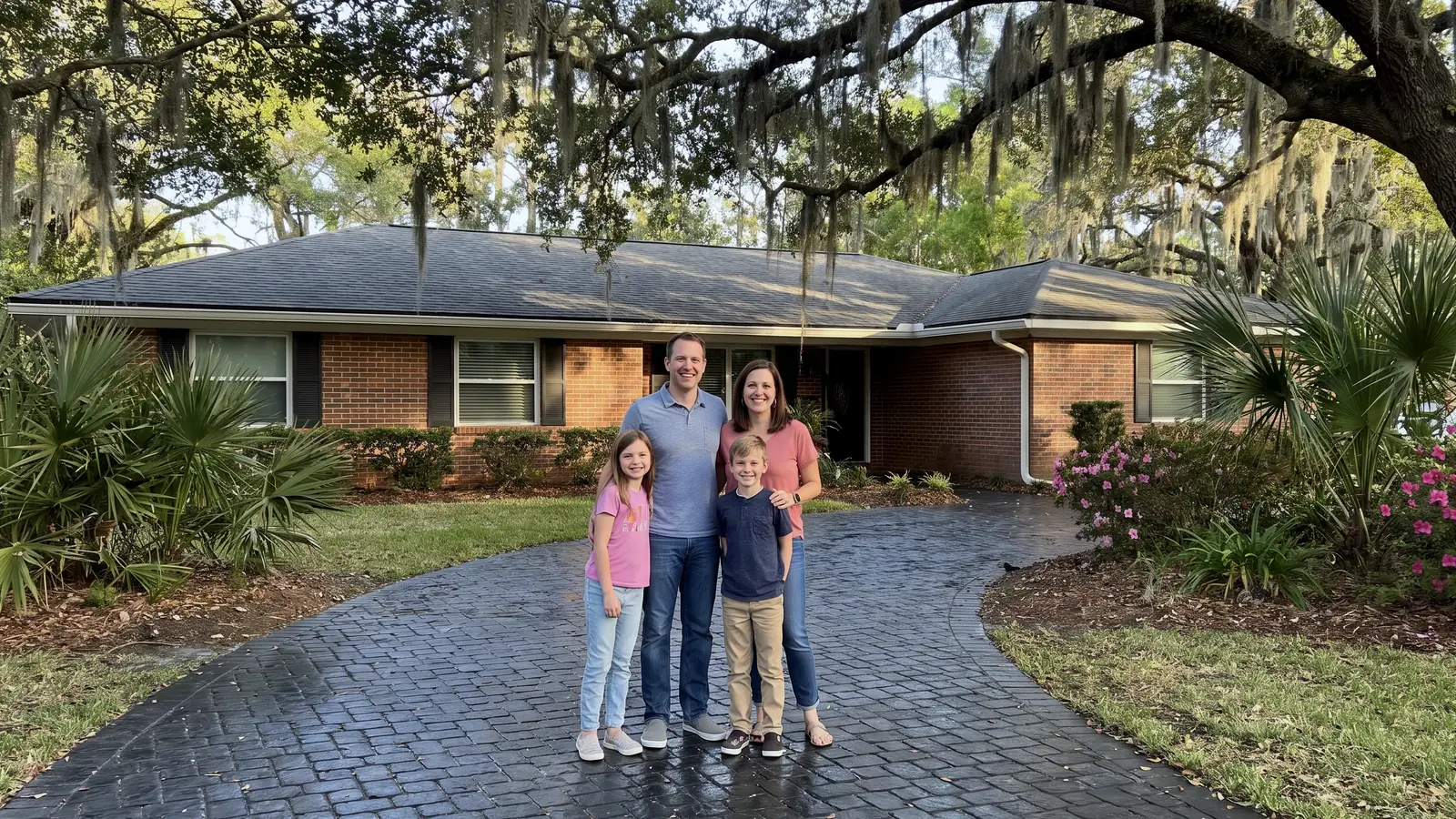
Protect travertine from pool water and stains
Travertine Sealing in Largo, FL
Call (727) 610-7187 for a free estimate on sealing the travertine around your Largo pool, lanai or entry.
- Brings out deeper paver color
- Fresh joint sand helps lock pavers in place
- Gives weeds less room to grow
- Makes the surface easier to keep clean
- Free estimate, no obligation
Request a Free Estimate
Free, no obligation.
Is there someone to seal my travertine in Largo, and how soon?
Yes, a local contractor handles travertine sealing for Largo homes, and a reply comes within 1 business day, usually much sooner. The visit and the estimate are free, and nothing obliges you to book. To get on the schedule, call (727) 610-7187.
Travertine is a natural stone full of tiny holes, so a splash of pool water or a drip of sunscreen goes in rather than sitting on top. Sealing fills the gap between a stone that drinks every spill and one that sheds it. Tell the contractor where the stone is and how the family uses it, and ask for a free estimate.
Which Largo neighborhoods and nearby places can ask about travertine?
Homes in Largo and every place below can request a visit. Travertine sealing is booked street by street, so name your neighborhood or ZIP when you call (727) 610-7187.
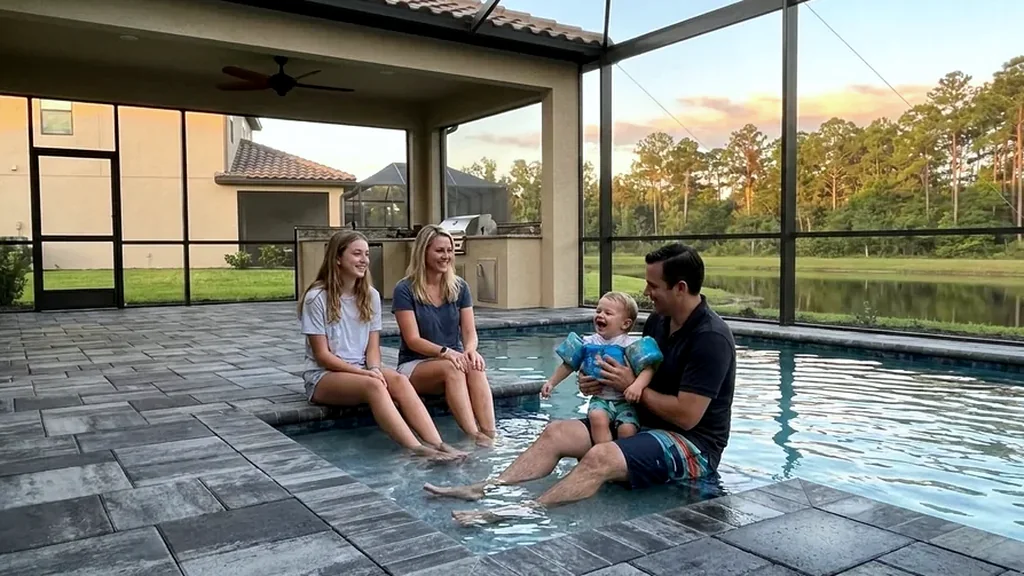
Why does travertine need different care than a concrete paver?
A concrete paver is a dense, man-made block, and travertine is stone that formed around mineral springs, according to a Largo stone care guide. That guide calls it naturally porous, with small surface voids. Dirt, pollen and pool water settle into those pores and are hard to lift out. Because the stone holds what lands on it, the sealer choice matters more here than on concrete. For a contractor's opinion on your stone, call (727) 610-7187.
Cleaning differs as well. The same guide warns that store-bought stone cleaners are often balanced for indoor tile and may not lift buildup from outdoor stone, and a Tampa Bay stone cleaner works with pH balanced products and a diamond honing step. Another guide says to avoid acidic cleaners, bleach and aggressive pressure washing on travertine. Ask which cleaner a contractor plans to use, then ask for a free estimate.
Is my travertine filled or unfilled, and does it change the sealing?
It can. The Largo guide says filled travertine has its voids leveled with resin or grout filler, while unfilled travertine keeps them open, which is common on textured pool decks and patios because open pores give more grip. A contractor looks at the face of the stone before choosing a product. To have yours looked at, call (727) 610-7187.
Filled and honed
Smooth and uniform. Easier to sweep, but it can feel slick once it is wet, so the finish and sealer need a careful pick.
Unfilled and tumbled
Open pores and a worn edge. Better footing near the pool, and more places for dirt and pollen to settle.
Polished or high gloss
Reflective. The stone guide says a polished face turns slippery wet and that honed or satin suits a pool deck better.
Aged outdoor stone
Gray cast and dark spots. These often point to organic buildup in the pores, cleaned out before any sealer goes on.
How do I know the old sealer on my travertine has stopped working?
A water drop gives the answer. Place a small amount of water on the stone and watch for two to three minutes, the Largo stone care guide suggests. If it beads, the seal is holding. If the stone darkens or the drop soaks in, it is due. Looks alone can mislead, since stone with a worn seal may seem fine until a stain lands. A contractor repeats the test in several spots, because splash zones fail first. To book that check, call (727) 610-7187.
Peeling, hazing or a milky cast points to a topical product that has failed rather than a penetrating one that has worn thin. A Largo company says failing sealer is stripped before new product goes on, since coating over it traps moisture. If that sounds like your stone, ask for a free estimate.
Penetrating or topical sealer: which belongs on a Largo pool deck?
Sources do not fully agree, which is why the question belongs on the estimate. A penetrating sealer soaks in and leaves the texture of the stone untouched. A topical sealer forms a film on top, and one stone guide says topical film can add slipperiness when wet and is generally not recommended for pool decks. A Largo paver company says natural stone gets penetrating and topical sealers, and that pool decks get a slip resistant additive. To hear which one a contractor would pick for your deck, call (727) 610-7187.
Base chemistry matters too. Water-based products have lower odor and easier cleanup, and solvent-based ones usually soak deeper and last longer but need more ventilation. Near a screened lanai, ask how the contractor handles fumes and overspray. Then ask for a free estimate.
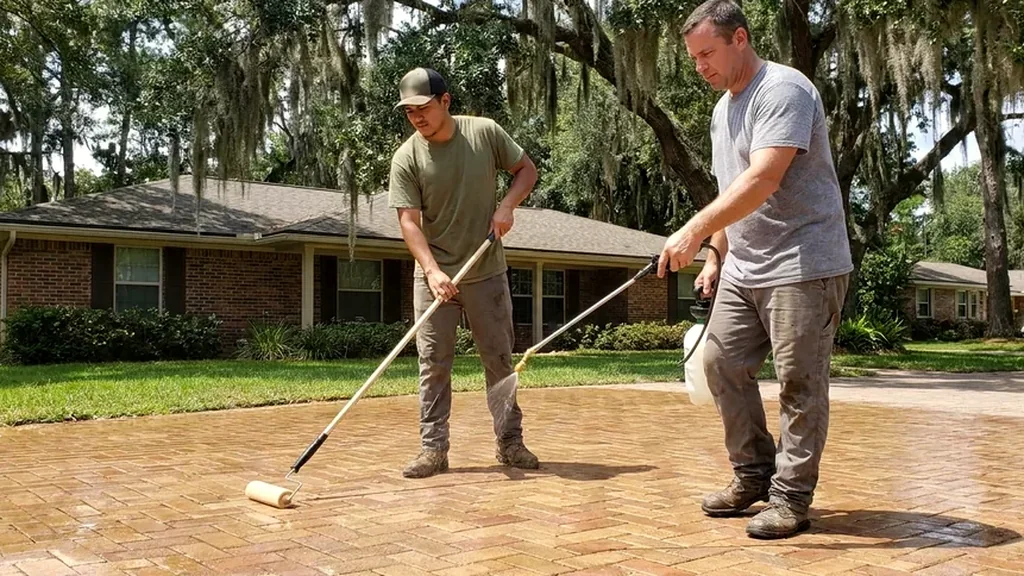
What do pool chemicals, sprinklers and oak leaves do to travertine in Largo?
Outdoor travertine takes a beating from several directions at once. The Largo stone care guide lists pool chemicals, irrigation runoff, UV and standing rainwater as the things that break down sealer faster than they would indoors, and it points to pool coping and splash zones as the spots that need the most attention. Largo gets 41.46 inches of rain a year according to Wikipedia, and June through September each average 5.4 to 6.3 inches, so standing water is a regular visitor. To plan around your pool, call (727) 610-7187.
Trees add their own marks. A Largo company says oak leaves and pine needles stain stone, and damp, shaded spots invite algae and mold. Shade is heaviest around the mid-century streets near Largo Central Park and East Bay Drive, based on one company's page. A sealed surface gives leaf tannins less to grab. To talk about a shaded entry, ask for a free estimate.
Will sealing change how my travertine looks or feels underfoot?
A penetrating sealer is chosen because it leaves the surface as it was, so the stone keeps its texture and its natural variation, according to the stone guide. A film type can dull the look and make the face glossy. Finish choice is the part you control. A Largo paver company offers four sheens, natural, mid-gloss, gloss and high-gloss, and a stone cleaner in the Tampa Bay area offers honed, satin or high-gloss on the stone itself. Next to a pool, grip counts for more than shine. To see samples, ask for a free estimate.
What is the process for a travertine sealing visit in Largo?
A visit follows a set order, and skipping a step shows up later as stains or peeling. To walk through the plan for your stone, call (727) 610-7187.
1. Inspection
A Tampa Bay stone cleaner starts with a look for stains, scratches and damage. The contractor also notes filled or unfilled stone and any lippage between pieces.
2. Cleaning
A pH balanced cleaner and gentle agitation lift buildup out of the pores. Stains get their own treatment because sealer locks them in.
3. Drying and test
The stone dries completely, then a water drop test shows how thirsty it is. Wet stone is not sealed.
4. Sealer
The product the contractor picked goes on at the label rate. Penetrating products often take one or two coats, per a pool coping guide.
5. Walk-through
You get the cure and walk-on times. A Largo company quotes 24 hours before foot traffic and 48 hours before cars on pavers, so ask for the stone's own times.
6. Care advice
Rinse splash zones, aim sprinklers off the stone and avoid acid cleaners and bleach.
How often does travertine need resealing in Largo?
No single schedule fits every deck. The Largo stone guide says outdoor travertine needs revisiting more often than interior stone, and a pool deck guide gives one to two years for heavy pool use and three to five for light use, with an annual check. Paver companies in Largo quote two to three years for concrete pavers. Sun, splash and traffic decide where your stone lands. A Tampa Bay stone cleaner also suggests professional cleaning and polishing every one to two years. To set a plan, call (727) 610-7187.
Can sealer go over stains or damp travertine?
No, and this is where most sealing jobs go wrong. A stone guide says never to seal over visible stains, because the sealer locks them in, and that the stone must dry completely, then pass the water test again. New stone has its own wait. Grout, mortar and setting materials need to cure fully, and construction dust must be washed away first. If the stone is new or has a mark, say so when you ask for a free estimate.
Does a homeowners association or a newer subdivision change anything?
It can. Bardmoor, off Starkey Road, is an HOA community near the East Bay golf course, a Largo company notes, and associations often set rules on exterior finishes. Sheen and color are the usual points. Check your rules before choosing a finish, then ask for a free estimate.
What does travertine sealing cost in Largo?
Expect travertine to price in the upper part of the paver range. A Largo company publishes $1.00 to $1.75 per square foot for cleaning, sand and sealing pavers, and it says pool decks and restoration work fall toward the high end. Its regional guide lists $1.25 to $2.50, and says natural stone may cost slightly more than concrete or brick. For a number on your stone, ask for a free estimate.
The one travertine example in the published figures is an 850 square foot Tampa Bay pool deck with full cleaning and a premium stone sealer, at $1,400 to $1,650. Small jobs meet minimum charges of $500 to $1,000. To check a bid against these pieces, call (727) 610-7187.
| Published piece | Figure | What it covers |
|---|---|---|
| Largo paver sealing range | $1.00 to $1.75 per sq ft | Clean, joint sand and seal on pavers, from a Largo company |
| Tampa Bay range | $1.25 to $2.50 per sq ft | Cleaning and sealing across the region, same company |
| Travertine pool deck, 850 sq ft | $1,400 to $1,650 | Full cleaning and a premium stone sealer, about $1.65 to $1.94 per sq ft |
| Pool deck, 800 sq ft | $1,000 to $2,000 | Any paver, clean and seal |
| Minimum service charge | $500 to $1,000 | Floor for a small job, covers labor, fuel and materials |
No published page lists a rate for travertine alone, so this table sets the one published travertine example beside the Largo and Tampa Bay paver rates. The company behind the figures says natural stone may cost slightly more than concrete or brick. Your own quote may land elsewhere.
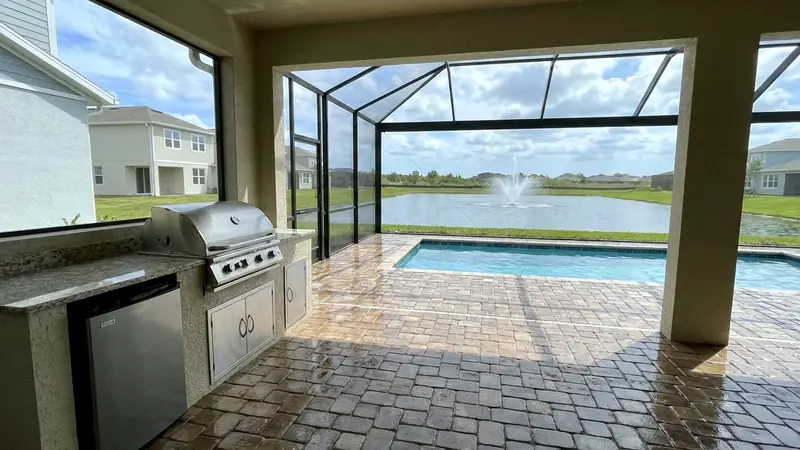
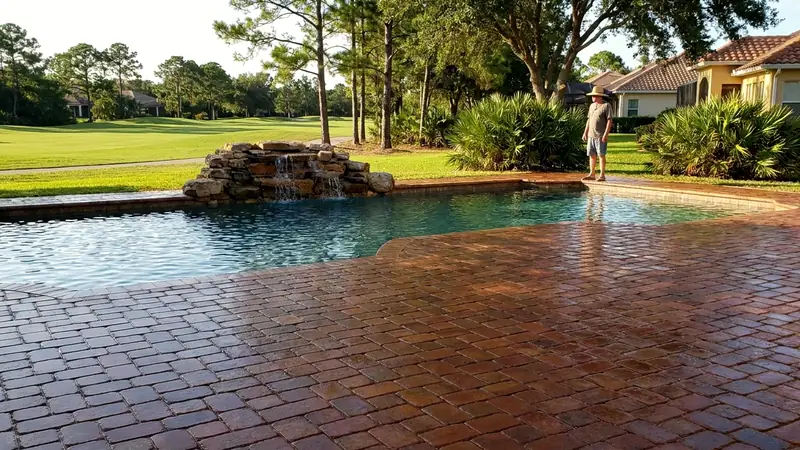
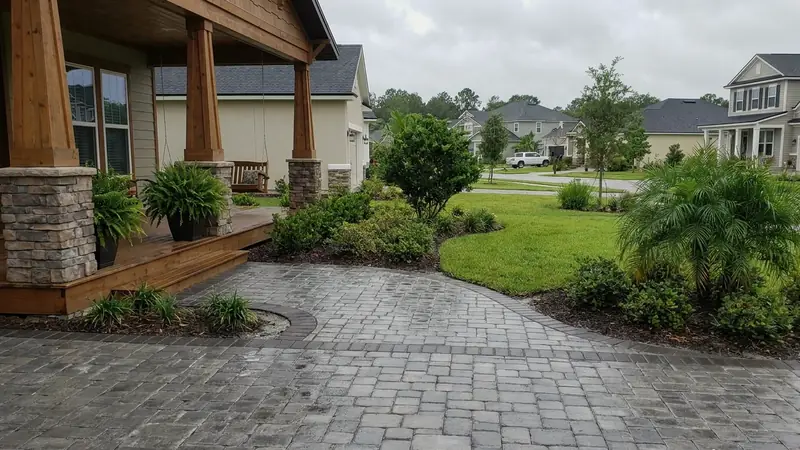
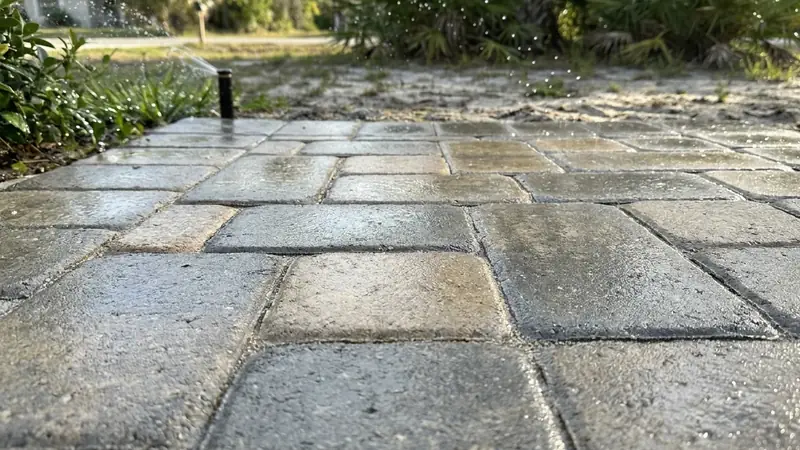
What does sealed stone look like at homes around Largo?
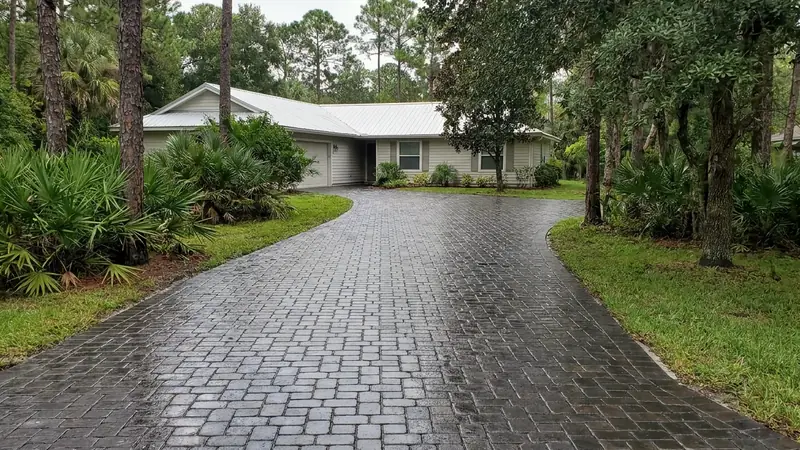
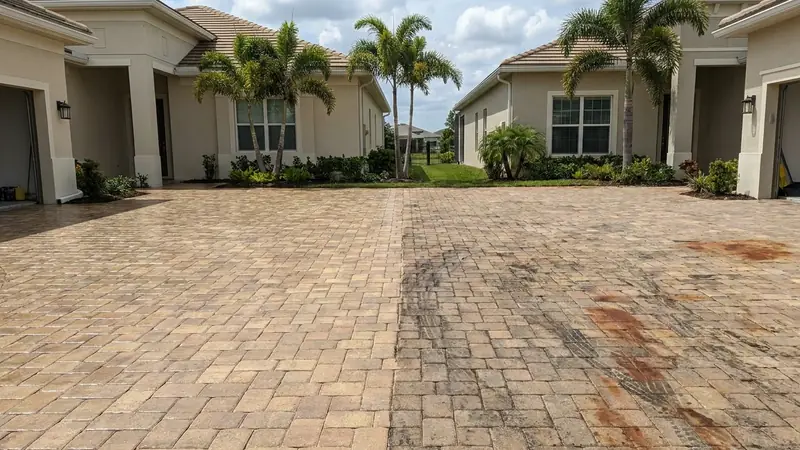
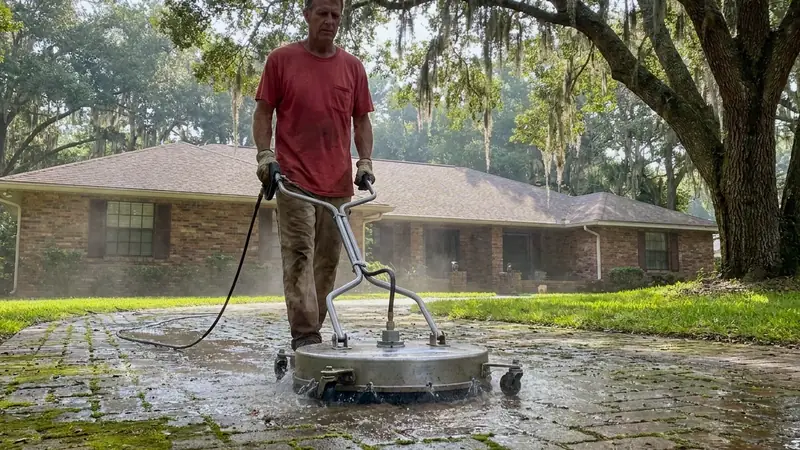
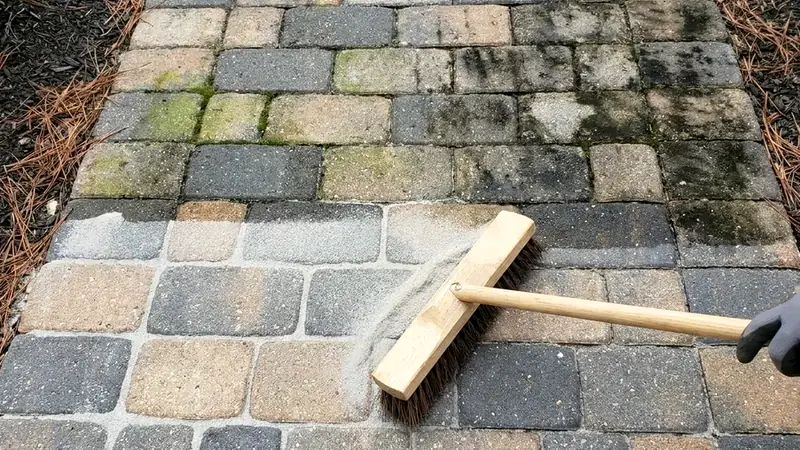
Questions Largo homeowners ask about sealing travertine
How often should I seal pavers in Florida?
The answer shifts with the stone and how it is used. A Largo company puts typical paver sealer life at two to four years and suggests resealing every two to three. For travertine, a stone care guide says heavy pool use may call for every one to two years, while light use can stretch to three to five. Inspect each year and act when water soaks in instead of beading.
What is the average cost to seal pavers in Florida?
A Largo company lists $1.00 to $1.75 per square foot, and the same company's regional guide lists $1.25 to $2.50. Its one travertine pool deck example, 850 square feet with full cleaning and a premium stone sealer, came to $1,400 to $1,650. Minimum charges of $500 to $1,000 can lift a small job above the per foot math.
What sealer suits pavers in Florida?
The answer changes with the material. For concrete and clay pavers, a Largo company uses a water-based acrylic urethane. For travertine, a stone care guide favors a penetrating sealer that leaves the texture alone, and it says topical film sealers are generally not recommended on pool decks. Ask a contractor which product goes on your stone and why.
Can travertine around a Largo pool be sealed?
Yes, and pool decks are where it matters most. Chlorinated water, sunscreen, sun and irrigation runoff wear sealer down fast. A contractor cleans the stone, lets it dry, then applies a sealer rated for pool areas. A water drop test afterward shows whether the stone now beads water.
Should travertine be cleaned before it is sealed?
Yes. Sealer locks in whatever sits on the surface, and a stone care guide says never to seal over visible stains. Stains are treated first, the stone dries completely, and a second water test confirms it is ready.
Is sealed travertine slippery by the pool?
It can be if the wrong product or finish is used. A topical film can add slipperiness when wet, and a highly polished face is slick underfoot. Tumbled and brushed finishes grip more than honed ones, and a penetrating sealer keeps the texture the stone already has. Rusty's, a Largo company, also adds a slip resistant additive to pool deck seals.
Do chlorine and salt hurt travertine?
Over time, yes. A Largo stone care guide names chlorine as the main chemical threat to outdoor travertine, and another guide says salt is hard on natural stone and that chlorine can stain it. Sealing slows both. Rinsing splash zones and keeping irrigation off the stone helps too.
Is travertine sealing worth it if my stone looks fine?
Looks can hide a spent sealer. A drop of water that darkens the stone and soaks in means the seal is gone, even when nothing is stained yet. A Tampa Bay stone cleaner calls sealing optional but advises it where traffic is high.
Ready to protect your Largo travertine?
Call, or send the short form, and a contractor answers within 1 business day, often much sooner.
Free, no obligation